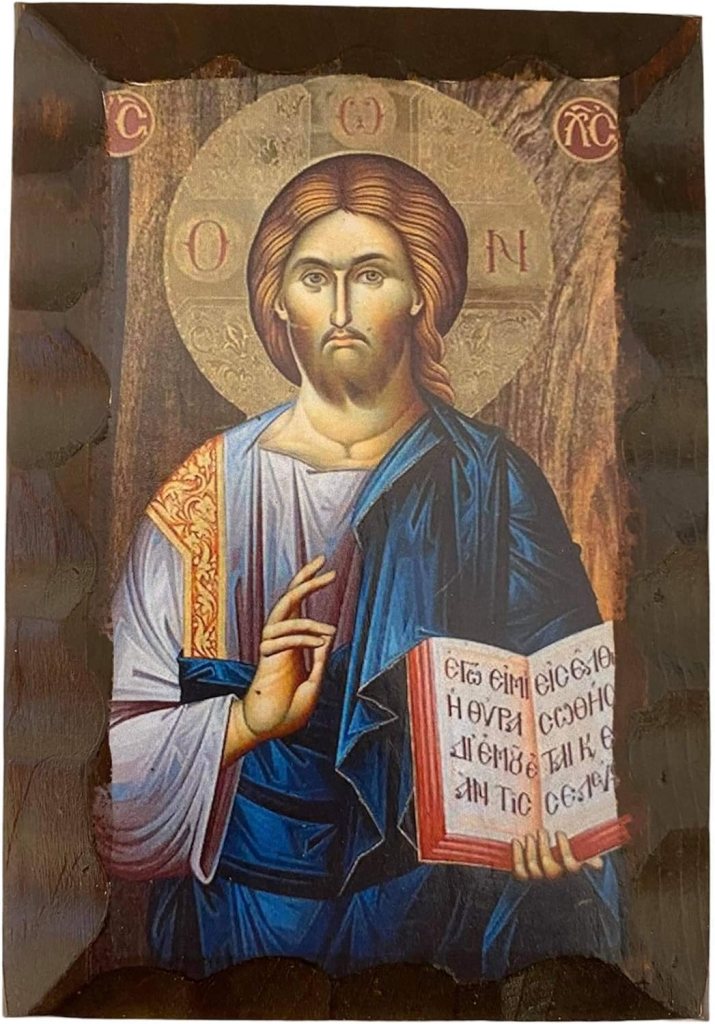
Read Romans 1: 1-11
There are portions of the Bible that folks tend to read through quickly because they seem a little monotonous. The list of names in Chronicles or the dietary laws in Deuteronomy come to mind. Almost every letter Paul wrote to Churches begins with an introduction of himself that can seem “old hat” to the student of scripture. We allow ourselves to be lulled into a false sense of “heard this all many times before”.
When it comes to the Letter to the Romans, we would be wise to pay close attention.
Paul was last Apostle called directly by Jesus for the working of spreading the gospel. Not the last person called to this task only the last person whom Jesus spoke to directly. All the apostles before Paul had been called in a person-to-person conversation. Paul saw Jesus in a vision and heard him speaking to him directly. He begins this letter calling himself the bond-servant of Christ.
The real word is slave. Most modern English translations soften the language because of the long history of slavery in the Western World. While this is understandable something is lost even in this first verse because we do not understand the word the way Paul’s audience would have understood it. In the Roman Empire there were slaves of many types. The important thing was a slave was not thought of as property so much as the consequence of one group being dominated by another. Slaves were the people who had been conquered and now had to live out a life bound to the will of the family that they served. There was a Paterfamilias (the Parent of the Family) at the top that held the power of life or death over the slave. The Paterfamilias was also called by the title Dominus or the one whom had dominion. All of this and more can be read about in Wikipedia.
Reflect now on how the first listeners heard these words. In a few syllables, Paul communicates he was one who had been conquered by Christ Jesus, that Christ Jesus was the Paterfamilias, the Dominus, and Paul was slave to that household. Had they been aware that Paul was a Roman citizen the claimed status of slave would be even more striking. He goes on to say that his servitude was for the purposes of the gospel, to explain what that gospel message is about.
When was the last time you read the Old Testament? If it has been a while you may want to go back and dive in. Why? Because according to Paul the gospel is contained in the Old Testament. Check out the second verse (which in reality is a clause in a much longer run-on sentence that culminates at verse 7!): “which he promised beforehand through His prophets in the holy Scriptures; concerning his son…“
Paul is not alone in saying that the message of the Gospel is found in what we today call the Old Testament. Twice, Jesus demonstrates this same truth. In Luke, the travelers to Emmaus encounter a stranger along the way who asks the question, “was it not necessary for the Christ to suffer these things and enter into His glory? Then beginning with Moses and with all the prophets He explained to them the things concerning Himself in all the scriptures.” (Spoiler Alert! the stranger is Jesus.)
Later he appears to the first disciples and says “These are My words which I spoke to you while I was still with you, that all things are written about me in Law of Moses and the Prophets, and the Psalms must be fulfilled. Then he opened their minds to understand the Scriptures.”
Jesus read the Old Testament. So should we.
The writer of Hebrews begins his great letter with no introduction but with these words: “God, after he spoke long ago to the fathers in the prophets in many portions and in many ways, in these last days has spoken to us in his Son, whom he appointed heir of all things, through whom he also made the world…“. We will get back to that last part soon enough, but there it is again that the Old Testament contains the truth of the Gospel.
It was the Old Testament that Paul went back and studied after he regained his sight (figuratively and literally) to understand how it was that the crucified Jesus of Nazareth could be alive and speaking to him when he had traveled to Damascus. Luckily for us Paul gives us the shorthand version in the salutation of this letter.
“...His son, born of a descendant of David according to the flesh, who was declared the Son of God with power by the resurrection according to the Spirit of Holiness, Jesus Christ our Lord.” Here we see that Jesus is the promised Messiah (heir to the throne of David) and that after the resurrection he has been empowered as the Lord. (Jesus, the Christ, our Lord would be an acceptable alternative translation.) This is the shortest way that you can summarize the story of Jesus found in the Old Testament. A little longer way to flesh it out would be to say that Jesus is the one promised to Eve who will defeat Satan. Jesus is the heir of Abraham through whom all the people of the world shall be blessed. He is the heir promised to David who shall sit on the throne for all eternity. He is the one Jeremiah spoke of who would bring about the new covenant in which the law would be written on the believer’s hearts and God would remember their sins no more. He is the Suffering servant of Isaiah by whose stripes we are healed. The one who would be YHWH returning to his temple promised in Ezekiel. The son of righteousness rising with healing in his wings according to Malachi. (The list is virtually endless!)
Still, there is more in this quick summary than meets the eye. A long running argument (controversy, even heresy depending on how one views these things) exists in the Christian world about the divinity of Christ. In the earliest centuries of Church history, the argument took the form of adoptionism. The idea being that Jesus was just a man like any other until God chose to adopt him as his son. When the adoption took place was argued both at the baptism and after the resurrection. In more recent times the argument centers around when did Christians decide that Jesus was God. This controversy reignited late in the last century over the idea that there were so called gnostic Christians who were shut out by the orthodox but who had the right idea all along about who Jesus really was. Our enemy, the eternal liar, wants people to question the divinity of Jesus. A Jesus who is nothing special is a Jesus who can be ignored.
Some of those who argued for adoptionism pointed to this verse in Romans. To them, even Paul is suggesting that Jesus is appointed to his special role after the resurrection. This is a poor understanding of Paul and the early Christians. So as not to get bogged down into translation issues I will remind you of four different voices of the first generation of Christians who suggest otherwise.
We will start with Paul. To the Philippians he writes of Jesus, “Although he existed in the form of God, he did not regard equality with God as something to be grasped but emptied himself taking the form of a slave being made in the likeness of man.”
Luke writes that the angel Gabriel told Mary, “The Holy Spirit shall come upon you and the power of the Most High shall overshadow you; and for that reason, the holy child shall be called the Son of God.“
In Hebrews (continuing the passage quoted above), “and He is the radiance of His Glory and the exact representation of His nature and upholds all things by the word of His power. When he made purification of sins, he sat down at the right hand of the Majesty on High...”.
And our fourth witness is the Gospel of John where we read “In the beginning was the Word and the Word was with God and the Word was God… and the Word became flesh and dwelt among us, and we saw His glory, glory as of the only begotten from the Father, full of grace and truth.”
The Bible is quite clear that Jesus is God.
Paul is not saying that Jesus became the Lord after the resurrection but rather in the same way that a prince is always the king even before the coronation, Jesus is declared the Lord after the resurrection. He does not become it in that moment but is revealed as always having been that from the beginning. One needs to look no further, in my estimation, than the repeated use of Lord as a title for Jesus. Paul was a good Jew. A faithful well-educated rabbi. He knew that the word Lord was the word that the Jews had used for centuries to avoid saying the sacred name (YHWH) aloud. He would never have used the title lightly for Jesus.
Many scholars like to side-step this reality by saying that the use of Lord for Jesus was a political statement to draw the distinction between Jesus and Ceasar (the emperor cult in Rome was already, at this point, beginning to deify Caesar) who was known as Lord of the Earth. It is true that declaring Jesus as Lord was a political statement in that day (as it is in our own context), but that fact does not diminish the truth of who the first century Christians understood Jesus to be.
And if he is Lord, then he is worthy of our faith and obedience, which is what Paul says is the purpose of the preaching of the gospel. “Through whom we have received grace and apostleship to bring about the obedience of faith among all the gentiles for His name’s sake, among whom you also are the called of Jesus Christ.”
So, we can draw 3 conclusions from this short passage. First, that Jesus is the promised one of the Old Testament. Two, that Jesus is the Lord God. Three, he is worthy of our faith and obedience.
Wow. Isn’t scripture amazing?
If this is your first time to The Hypocritical Christian, welcome, I am glad that you are here. Honored that you would consider reading at all. Thank you for reading to this point in the post. We are in the midst of a journey through Romans, where we are seeking to understand how we are to be “transformed by the renewing of our minds” (Rom 12:2). Along the way we are going to incorporate other portions of scripture from throughout the Bible but principally from Luke, Philippians, and Hebrews.
At the risk of going too long, I want to highlight briefly two words that will be essential to our understanding of Romans and Paul’s desire that we are not conformed but transformed (this I believe is the spiritual gift that Paul wishes to impart mentioned in Romans 1:11); flesh and spirit.
Paul, a good student of the Old Testament, believes that with Christ’s resurrection a new age has begun. This new age is the age of the Spirit. The Age of the Spirit (wherein believers exist in the power of the Holy Spirit) continues until the return of Jesus and the world is finally set to right again as described in Revelation 21-22. The age of the Flesh is how the world operated until the advent of Jesus and continues to operate for non-believers until the second coming of Christ.
For now, think of it this way. All of us exist in the sphere of the Flesh. We will spend the next several posts discussing the sphere of the flesh and the ways in which it manifests itself individually and collectively all around us. Then we will begin discussing how the age of Spirit, which has broken in, changes us as we become believers (or continue on as believers) and how the influence of that Age should impact our thoughts and behaviors.
This image can help us understand:

As believers we currently exist in a bifurcated world. We are perpetually influenced by both the world (Age of the Flesh) and the presence of the Holy Spirit (Age of the Spirit). To put it simply these two spheres are the influence which seeks to conform us and the influence that has the power to transform us.
But all of that is for future posts.
Peace to you on your journey. Vaya Con Dios!
Feel free to use this Bible Study for your own groups or discussion. It is freely given. If you do I merely ask that you acknowledge where you got it and if you find it useful that you encourage others to seek it out. It is freely given and written with fear, foreboding, and prayer by a fellow hypocrite who is simply trying to figure out the road ahead.

 The Hypocritical Christian