Search

The Hypocritical Christian

Tag

sin

People are No Good

3.3

Read Romans 3:1-20

A few years back, there was a popular country music song called “People are Good.” It was a number one hit for Luke Bryan. I know it was a number one hit because I looked it up and also any country song that I become aware of when it was released is bound to have been in the top ten. I don’t pay much attention to country music. The chorus begins with the line “most people are good”. Overall, the song is fine.

Mr. Bryan said that what appealed to him about the song when he first heard it was that it communicated some good vibes for people rather than the humdrum of negativity that we are exposed to most of the time. The song was made for pick-up truck drivers in places like Texas, Tennessee, and Florida where complementing mothers, acknowledging high school football, and recognizing the dignity of hard-working folks will always play well. In other words, it hits all the feels. About the only thing that you can say against the song is that there is no mention of dogs. Well, that and it is crummy theology!

The Apostle Paul has a counter argument:

There is none righteous, not even one; there is none who understands, there is none who seeks for God; all have turned aside, together they have become useless; there is none who does good, there is not even one. Their throat is an open grave, with their tongues they keep deceiving, the poison of asps is under their lips; whose mouth is full of cursing and bitterness, their feet are swift to shed blood, destruction and misery are in their paths, and the path of peace they have not known. There is no fear of God before their eyes. (Romans 3:11-18)

With this litany of scripture verses, Paul completes the indictment of all of humanity that he began at Romans 1:18. Recall “for even though they knew God, they did not honor Him as God or give thanks, but they became futile in their speculations, and their foolish heart was darkened.” Along the way he pointed out our preference for the Gods of our own making, the appeal of self-righteousness, and reminded his Jewish brethren that even though they had received the law they failed to follow it. All people are guilty before the Lord God and deserving of punishment. We are all in trouble when the wrath of God revealed (Rom 1:18) becomes the wrath unleashed at the final judgment.

Now we know that whatever the Law says, it speaks to those who are under the Law, so that every mouth may be closed and all the world may become accountable to God; because by the works of the Law no flesh will be justified in His sight; for through the Law comes the knowledge of sin.

Mr Bryan’s lyric (wonderfully sung in an understated way) reflects the attitude of most people. I heard similar sentiments all the time in my days as a youth director and pastor. It is comforting to think that people are at their core are basically good but that is not what the Bible teaches, nor does it jive with reality.

Look back at the litany above and ponder the following:

How many times in the last week did you say something negative about a friend, a coworker, a family member, a celebrity, or an elected official? Did you gossip about others?

Did you lie? Even a small one. Something seemingly irrelevant like telling the officer that pulled you over for speeding that you didn’t know what the speed limit was or how fast you were going?

Their throat is an open grave, with their tongues they keep deceiving, the poison of asps is under their lips; whose mouth is full of cursing and bitterness

Did you get angry at the people who voted differently from you in the last election? Did you watch the news and think this or that politician is “stupid” or “a threat to the country”? Did you wish someone were dead?

I know many people who wish the assassin who shot at Trump hadn’t missed. Others have applauded the death of the United Health Care CEO and lionized his murderer this year. People have set fire to Tesla dealerships because of Elon Musk’s government service. Just two weeks ago, I saw a Tesla with a bumper sticker that said the driver is anti-tariff presumably in an attempt to protect them from the vitriol and anger that is being directed their way.

… their feet are swift to shed blood, destruction and misery are in their paths, and the path of peace they have not known. There is no fear of God before their eyes.

I haven’t even mentioned the wars that are raging, drunk drivers, the people who are profiting from sex traffic, molesters, pedophiles, murders, abusers, drug dealers, and terrorists.

Where I live even people who “are good” fail to yield to folks entering the highway, speed through school zones, and cut in line at the Starbucks. They are some of the wealthiest people in the world in terms of money and time and give very little of it back to aid the poor and the needy. They are more likely to rescue a dog from a shelter than give a homeless person a meal.

Here is a non-hypothetical example. A few weeks ago, I swung by the local grocery store to pick up a couple of items. As I am walking up to the store, I heard a grown man screaming obscenities at someone. Come to find out he was berating a woman in a car for her driving. He was escalating to the point that several male patrons, me included, began moving closer in case there was need to intervene. Thankfully he allowed her to drive on.

People are not good. Even Jesus said so. See Mark 10:17-27.

When God made people, we read that he breathed into Adam and Adam became a living soul. At first glance you think so Adam began to breathe and live, but “living soul” comes from a Hebrew word, nefesh and it means bundle of desires. That is what we all are — a bundle of desires — our mishandling of those desires is what causes sin.

If we are honest, most of the time, we do what we want when we want. If it is something that we should not do, we justify it to ourselves and others. We have been like this from the start. Eve saw that the fruit was pleasing, looked tasty, and she wanted to be like God. She and Adam ate. When God confronts them, Adam blames God saying, “the woman you gave me gave it to me”. Eve says, “it was the serpent”. No one is taking responsibility. Eve at least points the finger at the serpent’s cunning. Adam blames God.

How is this any different today when someone is in a car wreck and looks for a way to blame the other driver? What about when a rapist blames the victim for dressing provocatively? In degree of villainy, sure, but in principle not so much. Any parent of two or more children knows how easily people take to blaming someone else or finding a way to avoid being punished. Elementary school teachers learn early on to ask, “why did you hit Johnny” rather than “did you hit Johnny?” if they want an honest response. Speaking of teachers, they also learn way too early that a disciplined child will report to their parents that they were punished because the teacher doesn’t like them rather than explain what they did wrong in the first place.

Some of you will say that all may be true, but I follow the rules most of the time and I am not guilty of any of those truly horrible things that you mentioned earlier. I would tend to agree, and neither am I, but an honest assessment of human nature would say people in general are capable of most of them. Someone is doing them. My wife loves to watch Law and Order SVU. That show only has stories to tell because there are lots of those crimes being committed every week.

Paul knew about self-justification. Several times in his writings and in the book of Acts, Paul shares that at one time he was blameless before the law. That is to say that he was blameless in the way that he interpreted the law. When we first encounter him in the Bible, he is holding the cloaks of those who stoned Stephen for the “crime” of believing Jesus was the promised messiah and doing acts of kindness to the poor in Christ’s name. As my Christian Ethics professor was fond of saying “never forget that the first great missionary of the Church was once a murderer”.

Perhaps this why the Old Testament records all these stories of broken, messed up families, and the repeated idolatry of Israel; to remind us that all of humanity is always just a breath or two away from living into their depravity. In just a few short verses from the passage above Paul will reiterate is point that we are all guilty. For all have sinned and fallen short of the glory of God.

And we have.

How depressing you might say to go through life with an attitude that everyone is a slave to depravity. that would be true if that was all the truth there was to hear. Thankfully, there is more to the story. People may be depraved but people are redeemable. That is a topic for next time.

No Escape

Read Romans 2: 9-29

As it happens, I believe that the Bible is the word of God. I trust that the LORD of heaven and earth, the one who created the cosmos and all that we perceive throughout reality, is capable of the relatively minor miracle of ensuring that the 66 books that we have are the 66 books that we need. There are several other reasons that I believe the Bible is trustworthy and the word of God, but that is for another post on another day.

Saying that I believe that the Bible is the word of God does not mean that I like everything that the Bible says. Like most Christians there are portions of scripture that I like more than others. There are stories that I find distasteful; I am looking at you Lot’s daughters. There are long sections that can seem tedious. I mean really, we could all build our own at-home tabernacle if any of us had any idea about the length of a cubit. The more I mature as a Christian the more I come to understand that it is all in there for a reason and it is all beneficial.

I bring this up at this point in our journey through Romans because I do not want us to forget Paul’s driving force for his missionary work. There is a day of judgment coming. Obviously, it was not coming as quickly as Paul feared, but as he pointed out in Romans 2:4 that the fact that the final judgment tarries is a reflection of the kindness and patience of God. Our response to the delay should be repentance.

There will be tribulation and distress for every soul who does evil, of the Jew first and also of the Greek.

The idea of the final judgment is prevalent in the Bible.

Many of those who sleep in the dust of the ground will awake, these to everlasting life, but the others to disgrace and everlasting contempt. (Daniel 12)

God will bring every deed into judgment, including every hidden thing, whether good or evil. (Ecclesiastes 12)

It is appointed unto men once to die, after that the judgment. (Hebrews 9)

For the Son of Man is going to come in the glory of His Father with His angels and will then repay every man according to his deeds. (Matthew 16)

It is that last one that stings the most, that is, if you know that it is Jesus speaking. Jesus talks about the final judgment quite a bit. He has several parables (sheep and goats, wheat and tares, the rich fool, etc) that are centered around the final judgment.

As central as it is to the teachings of Jesus, I am not so sure that it is a frequent topic from American pulpits. There are times when I think that I failed when I was a preacher for not commenting on the judgment to come more often. There are many who do not want the old “fire and brimstone” messages, but shouldn’t we occasionally have the heat turned up on us?

In Paul’s day there were many Jews who took comfort in the fact that they were children of Abraham. They thought that having the law gave them a special status. They were confident that they had little to fear of the coming judgment because they were the children of God. For them sin was something that needed to be atoned for with the proper sacrifice according to the covenant. Not unlike a Catholic today who might think sin is not that big a deal. I can go to the priest, confess, do the rosary prayer or whatever else he tells me and move on with my life. Protestants sometimes think “oh well the grace of Jesus covers that one too”. The Apostle Paul took a much more dire view of sin.

Paul understood what too many of us ignore. We Christians spend a lot of time talking down the importance of this sin or that sin. Like the Jew who was overly confident in the status of the people of God to be concerned with the condition of their own heart, we rely on grace to cover a multitude of our sins. As such, we are at risk of being overconfident of grace towards those sins that we simply will not stop committing. Like a junior high boy relying on body spray instead of a shower we expect grace to hide the stench. We are cavalier because we have not truly fathomed the cost of sin. I am not speaking in our own lives, although that cost is high. I am talking about the cost to God.

Christ died because of sin.

Let that sink in for a moment.

Sin was such a big deal that Christ had to die.

What is your own life worth? For what are you willing to die?

Christ died because of sin.

Christ died because of your sin.

Many are fond of saying that “Christ died for my sins”, but that also means that “Christ died because of my sins.” I mentioned in the previous post that mercy only has meaning when there is a law that demands punishment. There is no mercy where there is no judgment. In a similar way grace has no meaning where there is no sin. Soon we will be spending several posts on grace and justification and other good theology words as we go through Romans 3-8, but right now we need to sit in the knowledge that there is a judgment coming for a sin-filled world and that our sins are part of the collective problem that cost the savior his life. As Taylor Swift sings “it’s me, I’m the problem, it’s me”

Recall that Paul says that he is not ashamed of the gospel because it is the power of God for salvation to everyone who believes (Rom 1:16); but he wants to be sure that we understand that there is no other way to salvation. There is no partiality with God (Rom 2:11). Those who choose the path of self-justifying will suffer the same fate whether are familiar with the law of God or not. The path of self-justifying today looks like the person who wants to avoid faith and simply try and be a good enough person. They are not certain that there is a God or a judgment, but if there is, they intend to rely on the “T-Chart” method. Hopefully there is one more tick mark on the good side of the chart than the evil side of the chart. Poor things probably don’t even realize Jesus is serious when he says the “secret” stuff is going to be judged (Rom 2:16).

At first it seems that Paul gives this group hope when he says that the “doers of the Law will be justified” (v13), but Paul just spent several verses highlighting the sins that demonstrate the unrighteousness of humanity. Not only that but in the proceeding verse he says that all who sin outside of the Law will perish; and everyone who sins under the law are to be judged by the law meaning that they too will be deserving of capital punishment. Paul knows Psalm 24 too well to believe anyone can do the law perfectly enough to get into heaven.

No, there are no ways to justification with God through works. If there were then Jesus Christ would not have had to die.

The rest of Romans 2 relates to the Jew who is overly confident that his status as a Jew will result in his salvation. This first century Jew is in the synagogue (hearing the word but probably not being a doer of the word) and he is quick to correct and judge his neighbor. He knows the law, but he cannot be bothered to live a transformed life. Like a Christmas and Easter Christian, today; just need a little inoculation twice a year to keep up the effect of my baptism, but hey football, bass fishing, and travel ball are going to be more important most Sundays (or the rest of the week) than living a life guided by the Holy Spirit.

What Paul writes for the first century Jew (I fear may be true for the merely baptized) that circumcision is of value only if you are keeper of the law, as soon as you transgress the law your circumcision really amounts to very little. In a similar vein, you can be baptized, take communion, attend worship and be there every time the door is open, but if there is no transformation of the heart then it all comes down to nothing. Or as they use to say in East Texas “just being a church goer doesn’t make you a Christian any more than sitting in the garage once a week would make you a car.”

In summary, at the end of Romans 1, Paul explained how the wrath of God was being readied to be poured out on those who practice various idolatry and live fully into their decadence, depravity, and selfishness. At the beginning of chapter 2, he turned his gaze onto those who nodded approvingly at his list of vices and congratulated Paul for his apt condemnations. They forgot their own self-righteousness is a sin. Now, deeper into chapter 2, Paul has revealed that those who trust in their own innate goodness as one of God’s creations will also face the judgment. So too, anyone who seek to be deemed good enough on their own merit when the judgment comes will be found lacking. Those who are confident that they are among the elect (to borrow a phrase from the Presbyterians) and active in the church will not miss the guilty verdict either. Finally, he gets all the “good church people” who know what’s right and even remind others when they miss the target of righteousness. Those people who can quote scripture chapter and verse as they say but still also break the law on the regular will not escape the “tribulation and distress” of verse 9. This is because God is looking for those whose circumcision is of the heart by the Spirit. Jesus himself said the days were coming when people would worship God in Spirit and Truth for the Father is seeking such people to worship him (John 4).

All of this is building Paul’s case and soon enough he will reveal the gospel solution found in Christ Jesus. For now, it is Holy Week 2025, and we should all take our sin just a little more seriously.

Our sin is why Christ had to die.

The Most Important Thing Jesus Ever Said

craziestjesus-blank

Read Mark 7: 1-23

I have a confession to make.  In our increasingly enlightened, progressive era of church attendance ( you know come as you are in jeans and a t-shirt or only engage digitally) there is something that still bothers me. Coffee in the sanctuary. I know there has been coffee shops in churches for decades now.  Also, let me be clear, I do not mind the relaxing of expectations about the way we are dressed.  I am in favor of relaxed expectations about the way that children behave in the sanctuary.  All this is true and good; yet, when I see a coffee cups in the sanctuary it just bugs me.  Recently, I even tried to get over it.  While ushering I had a small Styrofoam Cup o’ Joe in the back with me. It didn’t take.  I felt horrible having it in there even with it out of sight.

If you regularly have your travel mug with you don’t worry I am not judging you. Even if I were judging you you shouldn’t worry because that would be a me-problem not a you-problem. I bet there are similar things for you though.  Stuff that happens in church that irritates you a little inside. Maybe it is drums in the chancel? People not bringing their Bible with them? Folks talking during the sermon or songs. Little ones standing on the pews?

Whatever it is that bothers us 9 out of 10 times it is about us and not about God.  The Lord does desire orderly worship, but let’s be real, most of our worship hang-ups are about us not wanting things to change or being presented the opportunity to feel morally superior to the perceived miscreant.

Mark 7 begins with the Pharisees challenging Jesus on their perceived slights of his Disciples.  Seems His followers were failing to wash their hands before they ate or to follow all the rules that the Pharisees had teased out of the Torah for washing pots and pans, etc.  As I write this we are in social isolation for Covid-19 so washing hands and disinfecting things is crucial.  But that is a health concern not a worship thing.  So while it may seem like a big deal in our context right now, it shouldn’t have been that big a deal back then. This didn’t stop the Pharisees from trying to make it a thing.

Jesus engages in the debate and points out to the Pharisees ways in which they had stretched the Torah to accommodate behaviors that were outside the intent. In this case he highlighted how they had made a way for a person to essentially disown his mother or father and not care for them in their dotage all the while supposedly not have to be concerned with the commandment “to honor your mother and father.” 

In this way, Jesus claps back at the shade the Pharisees were casting upon him and his disciples. Saying that they contradict the very law of God by the traditions that they have handed down.

mic drop

It isn’t just then and it isn’t just the Pharisees.  Every single Church and denomination throughout the history of Christianity has been guilty adding burdens on to people or explaining way things that should not be explained away about God from time to time.  Usually it is the former. 

For instance.  When I was a kid in a small East Texas town the Baptists were opposed to dancing and drinking.  Now I can see where they might have some concerns when these things were happening simultaneously, but there is a reason for the old joke: What is Grace?  That Baptists don’t recognize each other at the liquor store.  In that same small town, there were members of the Church of Christ and they did not have music in worship because they saw no proof of instruments in the New Testament.  Never mind the litany of instrumentation found in Psalm 150 all that is mentioned in the early church is singing. Even though the Old Testament couldn’t be trusted about guitars, organs, and drums, I would bet serious money they still pulled from Isaiah at Christmas time and from Daniel throughout the year to scare people about the end of the world. Many in the Assemblies of God are told that you cannot be a Christian and smoke.  I am sure that would come as quite a surprise to C.S. Lewis or Tolkien. I don’t know that they smoked pipes while they talked faith, but it was the mid-twentieth century and they were English. You do the math.

All this stuff is rules of man.  These are the ways that we separate ourselves and pass judgment on our fellow believers.  It is a variation of salvation by what we do (works righteousness) dressed up in the altar clothes to look more holy.  I suspect Jesus was thinking to himself, “Are you serious right now?  These guys have been going around doing the work of the Lord: exorcising demons, healing the sick, proclaiming the good news, and all you guys can think to complain about them is that they don’t wash before lunch?  Me, Give Me Strength!”

This may be why he gathers everyone around him saying “Listen to Me, all of you, and understand:  there is NOTHING OUTSIDE of a person going in that defiles them rather the things that PROCEED OUT FROM WITHIN a person are what defiles them.”

This means none of the food we eat, music we listen to, television that we watch, clothes we wear, or a thousand other things we say or do are causing our damnation.  That isn’t to say that there are not some choices that are better than others.  That isn’t to say that our choices cannot shape our character negatively. It also is not to say that none of things that we do work at odds with our salvation.  As the Apostle Paul writes “all things are permissible but not all things are beneficial.”

It is to say that when we get caught up in these arguments that we are missing the point.  We are misdiagnosing the problem.  We are failing to understand why we were in need of Jesus in the first place.

The disciples didn’t get it either and later asked him to clarify. By way of an answer, Jesus quoted Jeremiah to them and told them (and all of us) who we truly are:

“What comes out of people’s hearts are evil thoughts, sexual immorality, theft, murder, adulteries, deeds of coveting, wickedness, as well as deceit, sensuality, envy, slander, pride and foolishness.  These things from the heart are what defiles a person.”

Take a moment. You are on that list somewhere.  If you think are not, then you need to stop lying to yourself.  As Martin Luther cautioned, “You have yet to consider the depth of your own sinfulness.”  I know that you are on it.  Everyone is.  Even if you are sexually pure, are never slothful or gluttonous, and have refrained from killing someone, you are there.  You are there because you have had evil thoughts (i.e. hatred, judgment, prejudice, etc.) or you have had covetousness ( i.e. wanted something that belonged to your neighbor or a stranger).   Face it you have been red hot angry with someone before or you have watched MTV Cribs.  All have sinned and fallen short of the glory of God.   In case you are wondering foolishness is a technical term that describes the person who does not have God in their life (either though atheism or stubbornness) and does not want God in their life.  Everyone is on this list because this list describes the human condition. The tragedy of the human being is not just that we sin but that we want to sin.

This may be the most important thing that Jesus ever taught.  This is the great physician diagnosing the virus infecting us all.  There is no cure. There is no magic combination of steps and behaviors that can solve it. No manner of hand washing, no specific religious practices, no carefully constructed moral principles, nothing whatsoever can solve the problem.  The virus will always run its course, we never develop natural immunity, and the outcome is always death.

This is the diagnosis and spiritually healthy people understand it.  Spiritually healthy people recognize their utter helplessness to do anything about it.   Go ahead take a moment and let it sink in.  Take a moment and argue with me.  All I ask is that you look in the mirror and be honest with yourself.  Again, spiritually healthy people recognize the illness and the inability to heal themselves.  Everything else is various shades of self justification.  Nothing more; nothing less.

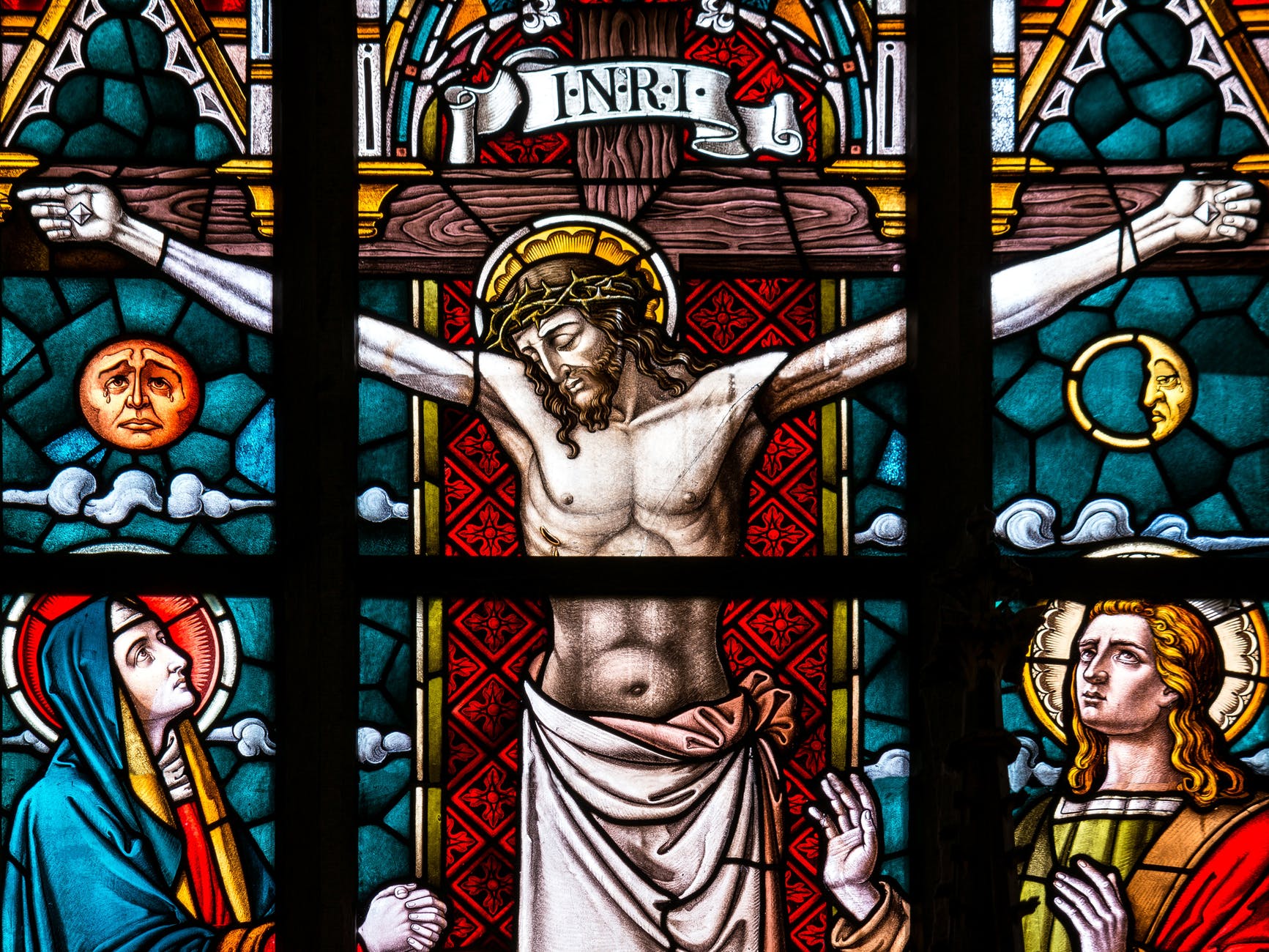
This is why there is a Good Friday.  Make no mistake, Good Friday had to happen before there could be an Easter morning.  No Crucifixion; no Resurrection.  Neither are metaphorical but actual events that occurred.  Jesus wasn’t crucified because he was saying impolitic things and upset the powers that be.  That is liberal Christian modernity claptrap.  Jesus wasn’t just some great moral teacher trying to help us live enlightened lives. That is a dismissive label that allows for people to treat Jesus words like a buffet line and only consume what suits their tender palate.  Christ died because our hearts needed it.  Christ died because we have sinful hearts and the outcome of sin is death.

Jesus of Nazareth, the Christ, the Son of God, died for every one of the ways you related to that litany of evil that springs forth from the human heart.  From your heart. Every lie, every lustful moment, every judging comment, every action taken in anger, every hurtful word or gesture, every single way you violated the expectation to love your neighbor as yourself. 

That is why Christ died.

art cathedral christ christian
Photo by Pixabay on Pexels.com

“For God demonstrates his love for us that while we were yet sinners, Christ died for us.  Much more then, having now been justified by His Blood, we shall be saved from the wrath of God through him.” (Romans 5: 8-9)

And all you have to do is believe that it is true and, believing, trust that God is at work in you and your life through Jesus Christ.  

“For by grace you have been saved through faith; and this is not of yourselves but is the gift of God, not the result of works, that no one should boast.  And we are His workmanship created in Christ Jesus for good works that God prepared beforehand that we should do them.”  (Ephesians 2:8-9)

This the gospel.

And you may recall what Jesus had to say at the beginning of Mark:

The time is fulfilled and the kingdom of God is now; repent and believe in the gospel


Website Powered by WordPress.com.

Up ↑